Lotería Cards in English
Mexican lotería has 54 cards, numbered from 1, El Gallo (The Rooster), to 54, La Rana (The Frog). Here they all are in the order of the traditional printed deck, with their picture, their name in English, the verse the caller sings before each one and what the card means in Mexico.
Want to hear them called? Cantala’s online caller sings all 54 aloud in Spanish, free.
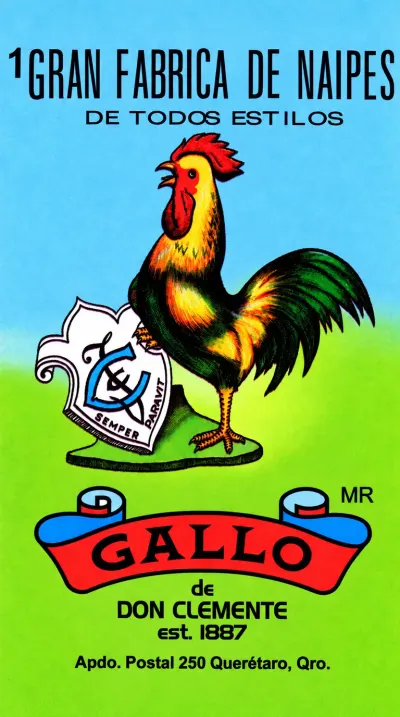
1 El GalloThe Rooster
“El que le cantó a San Pedro no le volverá a cantar”The one who crowed for Saint Peter won't crow for him again.
On ranches and in small towns, the rooster is the alarm clock that wakes everyone before sunrise, and a symbol of pride and nerve. The verse nods to the Gospel story of Peter denying Jesus before the rooster crowed.
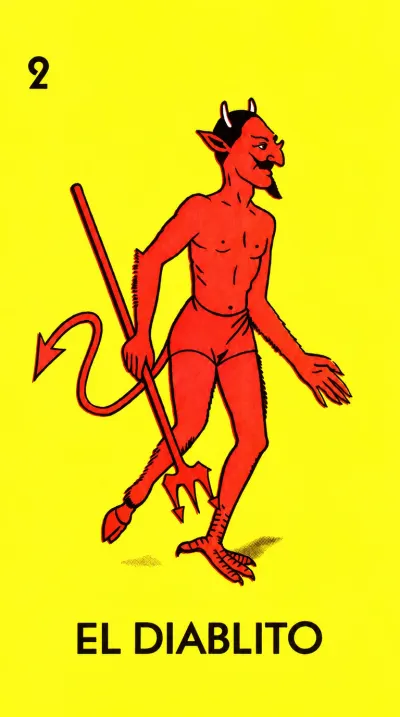
2 El DiablitoThe Little Devil
“Pórtate bien cuatito, si no te lleva el coloradito”Behave yourself, buddy, or the little red one will take you away.
More mischievous than scary, this devil comes from Christmas pageants and grandmothers' tales, and stands for temptation in a playful form. The verse is the kind of warning adults give kids, with “the little red one” meaning the devil.
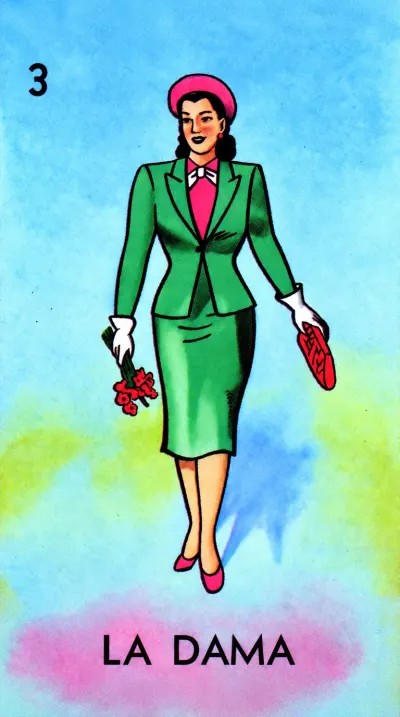
3 La DamaThe Lady
“Súbale, súbale, que se lo lleva el tren”Climb aboard, climb aboard, or the train will leave without you.
The Lady is the elegant city woman who dressed up for a stroll down the main street or Sunday Mass; with The Dandy, she makes up the deck's refined pair. Her verse sounds like someone hurrying passengers onto a train.
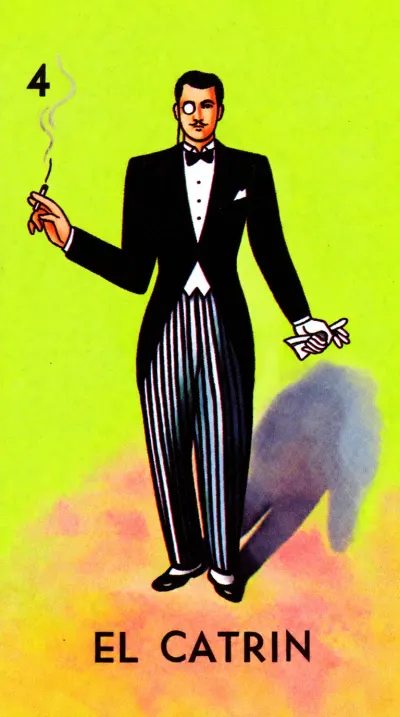
4 El CatrínThe Dandy
“Don Ferruco en la alameda, su bastón quería tirar”Don Ferruco in the park, about to drop his cane.
The catrín is the city dandy in European fashion from the Porfiriato era, who shows off more than he has; in Mexico the word still means a vain, overdressed person. His best-known partner is La Catrina, the elegant skeleton of Day of the Dead.
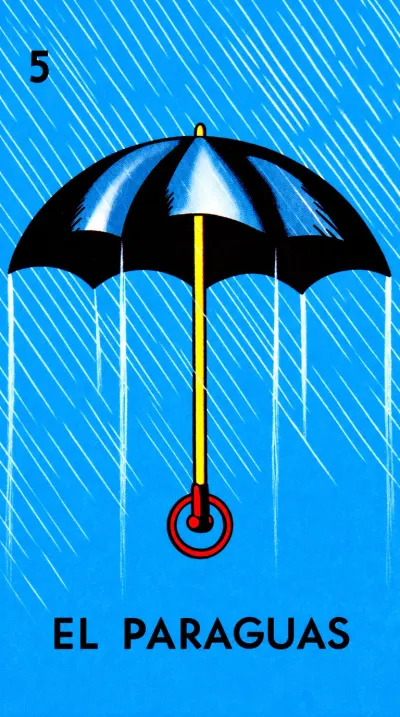
5 El ParaguasThe Umbrella
“Para el sol y para el agua”For the sun and for the rain.
In much of Mexico, an umbrella is used both in the rainy season and on days of strong sun, so it's an everyday object. The verse plays on its Spanish name, paraguas, which literally means “for water.”
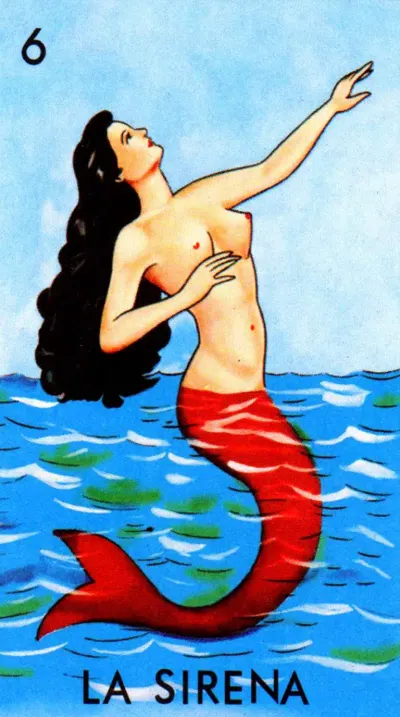
6 La SirenaThe Mermaid
“Con los cantos de sirena, no te vayas a marear”Don't let the mermaid's songs make your head spin.
The mermaid comes from sailors' legends of a beautiful song that led men astray, mixed in Mexico with tales of water women in rivers and lagoons. She stands for seduction and the danger of being carried away by pretty words.
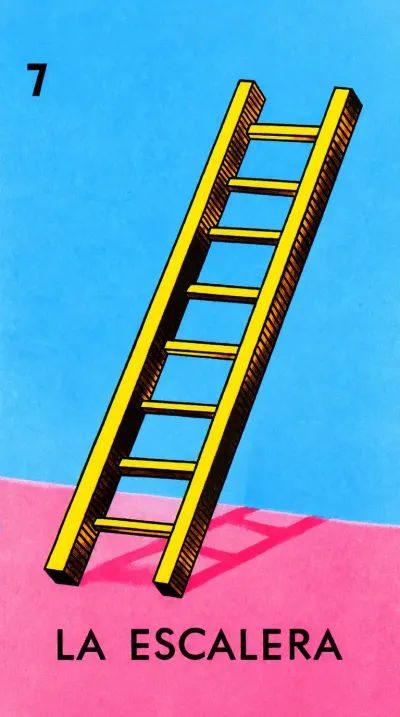
7 La EscaleraThe Ladder
“Súbeme paso a pasito, no quieras pegar brinquitos”Climb me one little step at a time, don't try to jump ahead.
Found at home, in the workshop, and on building sites, the ladder is an image of effort and getting ahead little by little. It also carries the old superstition that walking under one brings bad luck.
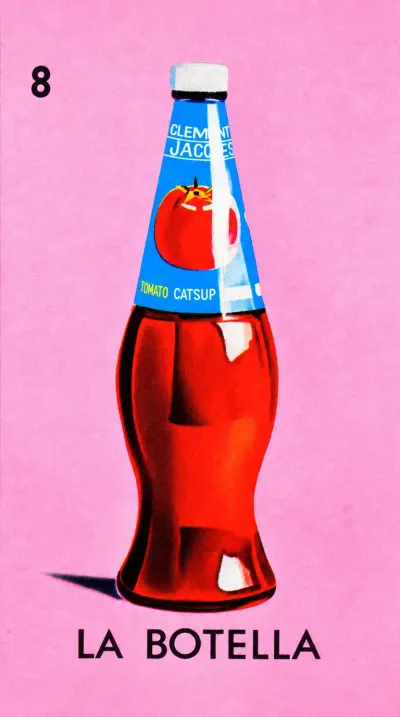
8 La BotellaThe Bottle
“La herramienta del borracho”The drunkard's tool.
The bottle evokes the cantina, the town fiesta, and the wedding toast, but also excess. Together with The Barrel and The Drunkard, it tells the comic story of someone who drinks too much, and its verse treats drinking as a trade.
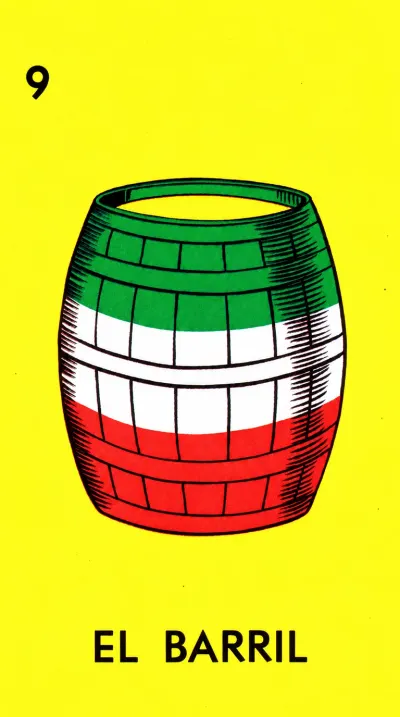
9 El BarrilThe Barrel
“Tanto bebió el villano, que quedó como barril”The scoundrel drank so much he ended up like a barrel.
Before modern containers, barrels held pulque, wine, water, and grain in shops and haciendas. In everyday Mexican speech, saying someone “looks like a barrel” is a blunt way of calling them potbellied, which is the joke of the verse.
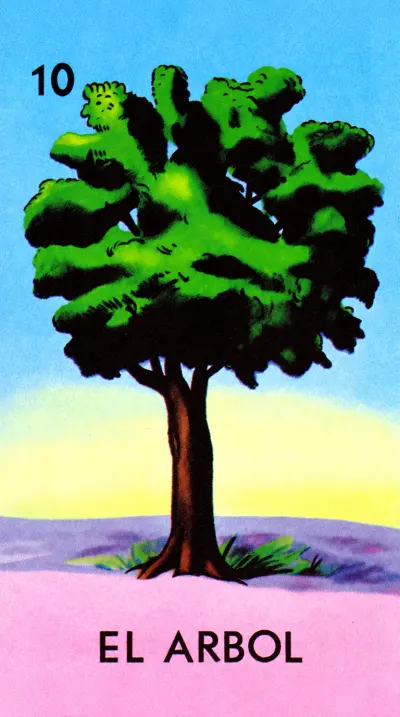
10 El ÁrbolThe Tree
“El que a buen árbol se arrima, buena sombra le cobija”Whoever leans on a good tree is sheltered by good shade.
In small towns, the big tree in the plaza or patio is where people gather and rest, a symbol of protection, family, and roots. The verse is one of Mexico's best-known sayings: staying close to good or influential people pays off.
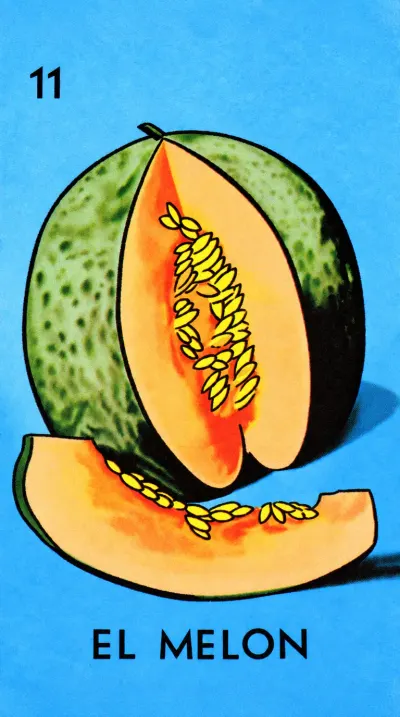
11 El MelónThe Melon
“Me lo das o me lo quitas”Will you give it to me or take it away?
Melon is market and street-stand fruit, sold in slices, with chile and lime, or as agua fresca on a hot day. The verse sounds like haggling at the market and leaves room for a cheeky double meaning.
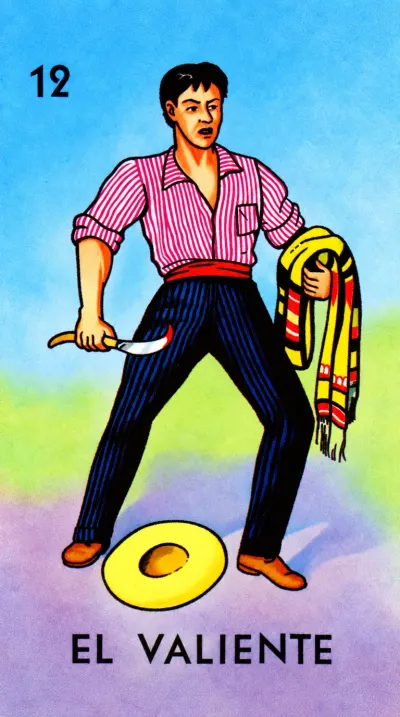
12 El ValienteThe Brave Man
“Por qué le corres cobarde, trayendo tan buen puñal”Why are you running, coward, carrying such a fine knife?
The Brave Man is the brawler of corridos and small-town stories, who backs down from no one and goes looking for a fight. The verse mocks him: carrying a weapon doesn't make you brave.
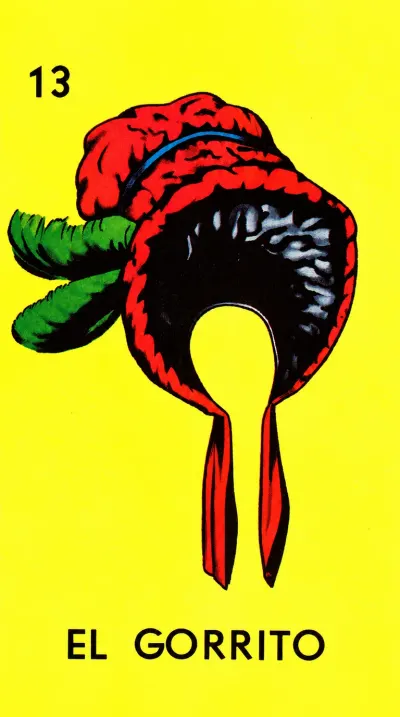
13 El GorritoThe Bonnet
“Póntelo que te lo dan”Put it on, they're giving it to you.
The little bonnet recalls the care of mothers and grandmothers: keeping a newborn's head warm and knitting baby clothes. It evokes tenderness and early childhood, and it's one of the simplest cards in the deck.
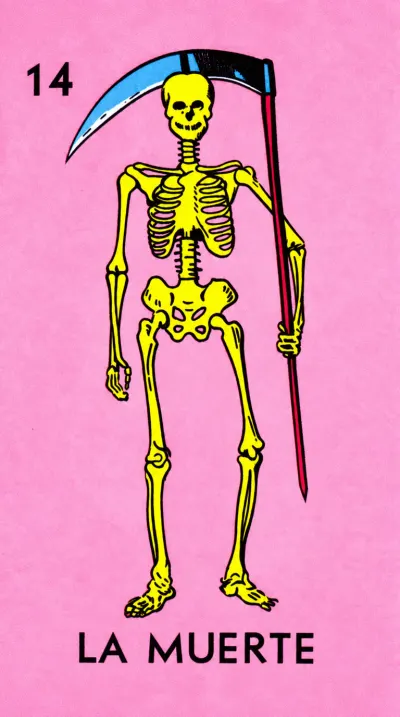
14 La MuerteDeath
“La tilica y flaca”The scrawny, skinny one.
In Mexico, death isn't hidden: it gets altars, playful verses, and a yearly welcome on Day of the Dead, plus nicknames like la flaca, “the skinny one.” The verse laughs at Death for being so thin.
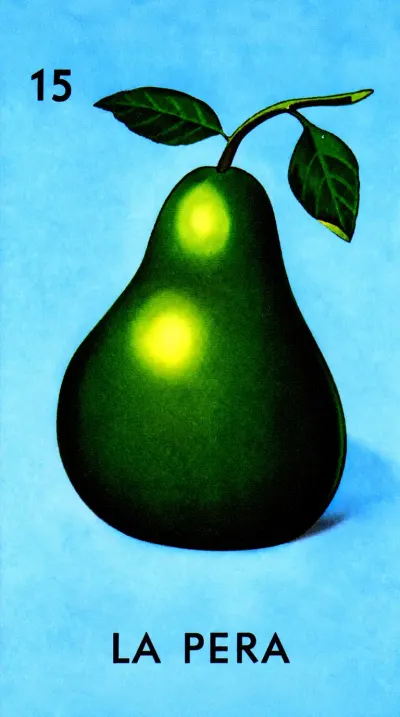
15 La PeraThe Pear
“El que espera, desespera”He who waits, despairs.
The verse is a pun: pera (“pear”) hides inside espera (“waits”). The saying fits the moment in lotería when you need just one more card to fill your board.
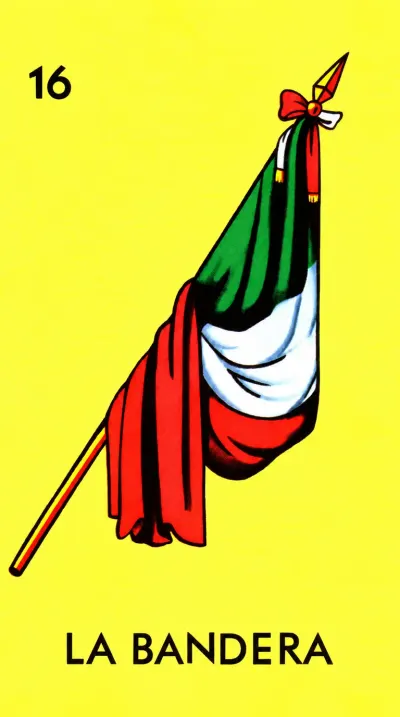
16 La BanderaThe Flag
“Verde, blanco y colorado, la bandera del soldado”Green, white, and red, the soldier's flag.
Mexico's flag is the national symbol above all: honored at school every Monday, waved during the Independence Day Grito, and filling the streets in September. Its three colors show up everywhere, from papel picado to chiles en nogada.
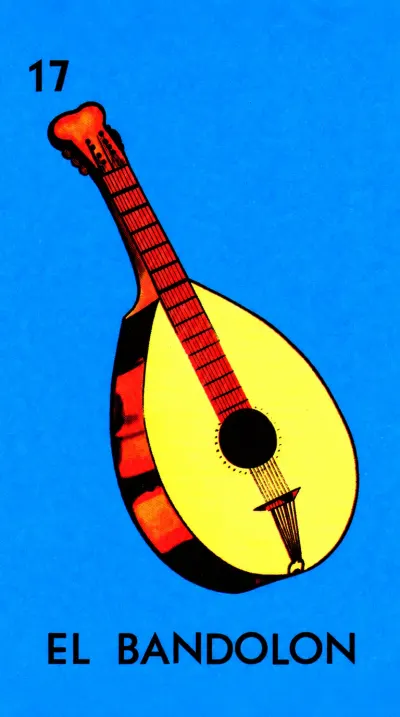
17 El BandolónThe Mandolin
“Tocando su bandolón, pasa la noche y el día”Playing his mandolin, he passes the night and the day.
The bandolón is a string instrument like a large mandolin, plucked with a pick, that has accompanied traditional Mexican music in several regions. It evokes serenades, town fiestas, and musicians who play by ear for hours.
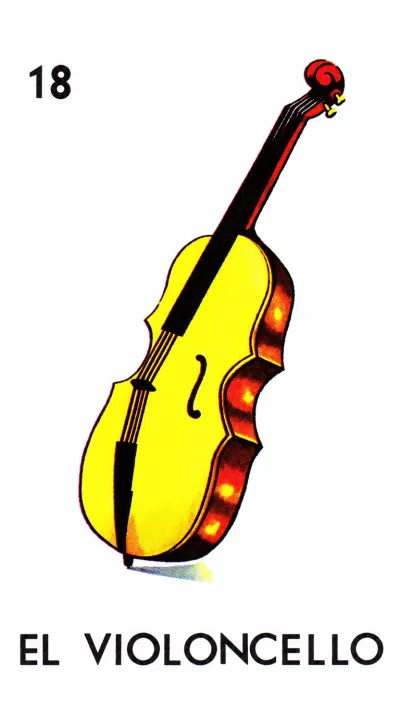
18 El VioloncelloThe Cello
“Creciendo se fue hasta el cielo, y como no fue violín, tuvo que ser violoncello”It grew and grew up to the sky, and since it couldn't be a violin, it had to be a cello.
The cello stands for concert music, more formal than the deck's other musicians. Its verse explains, almost like a riddle, that the cello is the violin's oversized relative.
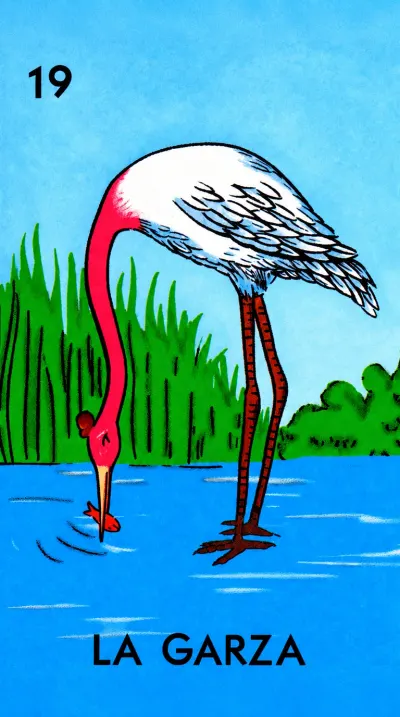
19 La GarzaThe Heron
“Al pasar por la laguna, me dijo la garza mora”As I passed by the lagoon, the gray heron said to me...
The heron is a bird of lagoons, rivers, and estuaries, standing still in the water as it waits for prey. Because of its slender figure, songs and verses use it to describe a slim, elegant woman.
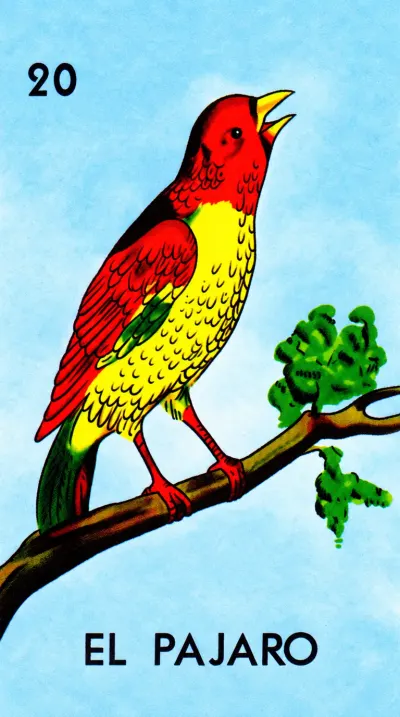
20 El PájaroThe Bird
“Tu me traes a puros brincos, como pájaro en la rama”You've got me hopping around like a bird on a branch.
Songbirds are part of the traditional Mexican home, with cages in the patio and bird sellers in the markets. The bird stands for freedom and joy, and in love songs for the restless lover, which is the complaint in the verse.
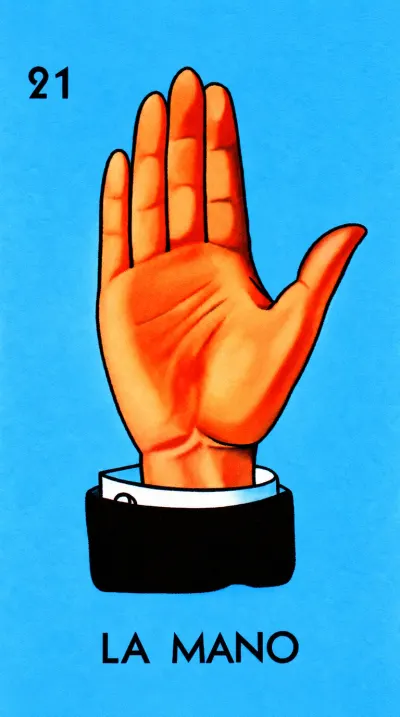
21 La ManoThe Hand
“La mano de un criminal”The hand of a criminal.
The hand is a symbol of work, help, greeting, and protection, but shown alone, with no body, it feels mysterious. The traditional verse plays on that eeriness like a clue in a crime story; some modern editions swap it for a kinder phrase.
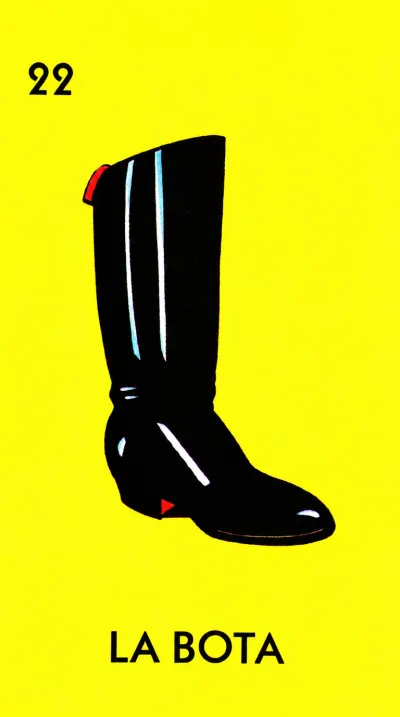
22 La BotaThe Boot
“Una bota igual que la otra”One boot just like the other.
The boot evokes the charro, the northern cowboy, and the farmworker who needs sturdy footwear, and in many regions it's part of fiesta and dance attire. The verse states the obvious, that boots come in pairs, in the tone of a riddle.

23 La LunaThe Moon
“El farol de los enamorados”The lovers' lantern.
The moon has guided planting, marked festivals, and inspired love songs all over Mexico, and many farming families still follow its phases. The verse casts it as the lamp that lights serenades and secret dates.
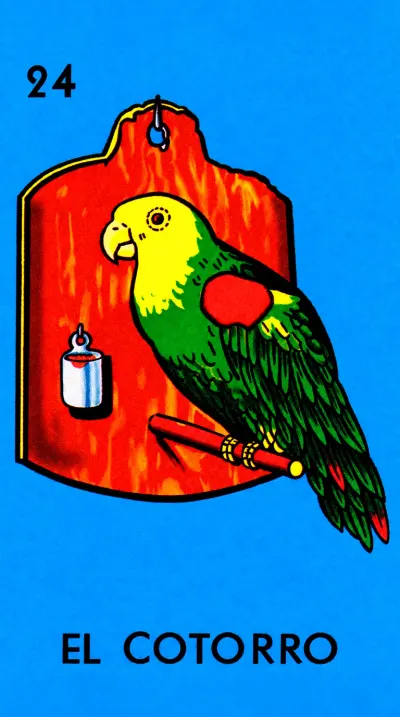
24 El CotorroThe Parrot
“Cotorro, cotorro, sácame de este ahorro”Parrot, parrot, get me out of this tight spot.
Parrots have long been patio pets in Mexican homes, famous for repeating words and making noise; from them comes cotorrear, to chat and joke around. The card evokes conversation, gossip, and good humor.
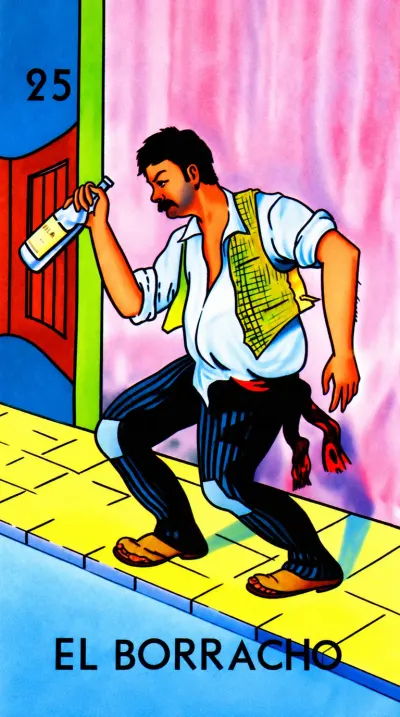
25 El BorrachoThe Drunkard
“Ah qué borrachito, no puede ni caminar”Oh, the poor little drunk, he can't even walk.
A cartoonish figure who completes the story of The Bottle and The Barrel, poking fun at fiesta excesses, though many families know the serious side behind the joke. The verse describes him with some tenderness instead of scolding him.
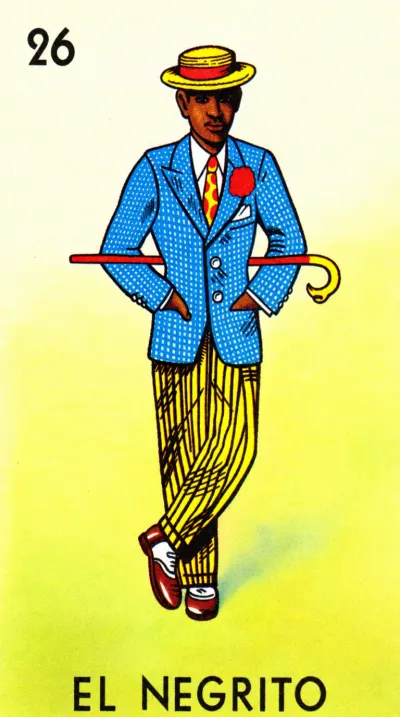
26 El NegritoThe Black Man
“El que se comió el azúcar”The one who ate the sugar.
One of the oldest figures in the deck, it reflects how people of African descent were depicted when the game was born; Afro-Mexicans have a long history in Mexico, especially on the coasts. Several modern editions have changed this card to be more respectful.
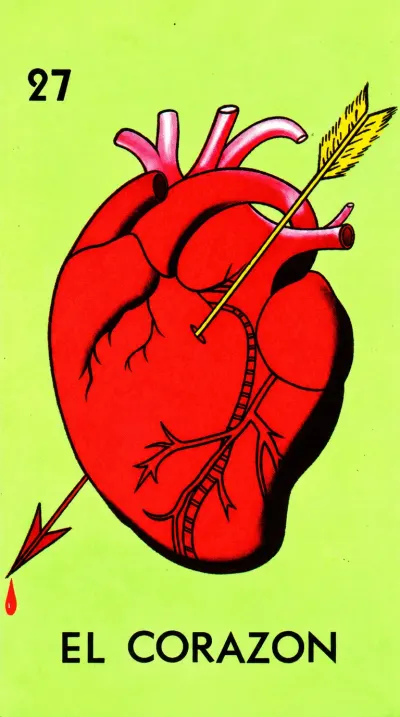
27 El CorazónThe Heart
“No me extrañes corazón, que regreso en el camión”Don't miss me, sweetheart, I'll be back on the bus.
The heart is a symbol of love, but in Mexico it also appears on ex-votos, church milagritos, and the Sacred Heart. The verse is a tender, funny goodbye from someone who travels far for work and promises to come back.
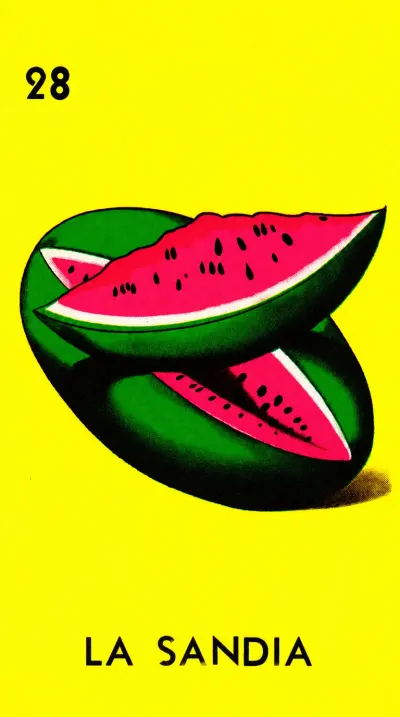
28 La SandíaThe Watermelon
“La barriga que Juan tenía, era empacho de sandía”The belly Juan had came from too much watermelon.
Watermelon is the fruit of hot days, beach slices, and agua fresca, and its green, white, and red make it feel very Mexican; Frida Kahlo painted it. The verse teases Juan, whose belly came from empacho, an upset stomach often talked about in Mexico.
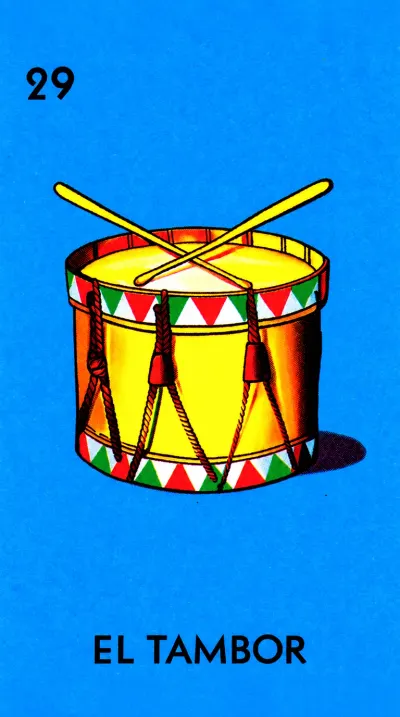
29 El TamborThe Drum
“No te arrugues cuero viejo, que te quiero pa tambor”Don't wrinkle, old leather, I want you for a drum.
The drum accompanies parades, school marching bands, processions, and traditional dances. “Old leather” means the drumhead but is also a way to refer to an older person, so the verse is a cheeky compliment.
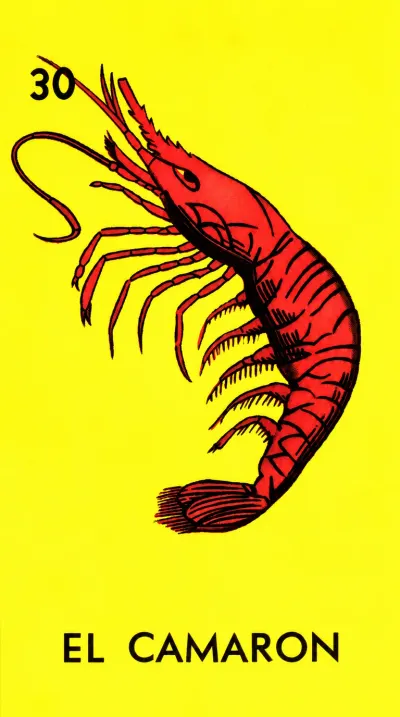
30 El CamarónThe Shrimp
“Camarón que se duerme, se lo lleva la corriente”The shrimp that falls asleep gets carried away by the current.
The verse is one of Mexico's most common sayings: whoever gets distracted misses their chance. In lotería it fits perfectly, because if you doze off, you don't put your bean on the card in time and someone else wins.
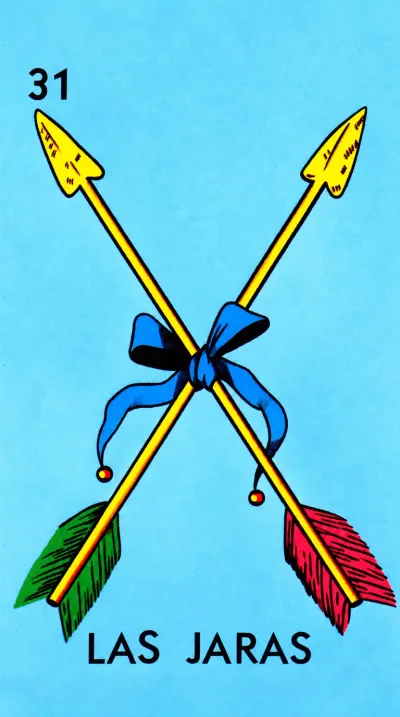
31 Las JarasThe Arrows
“Las jaras del indio Bernabé”The arrows of Bernabé the Indian.
In rural Mexican Spanish, jara means arrow, after a shrub with straight stems once used to make them. The card evokes hunting, the bow, and the Indigenous peoples who used these weapons; many people learn the word playing lotería.
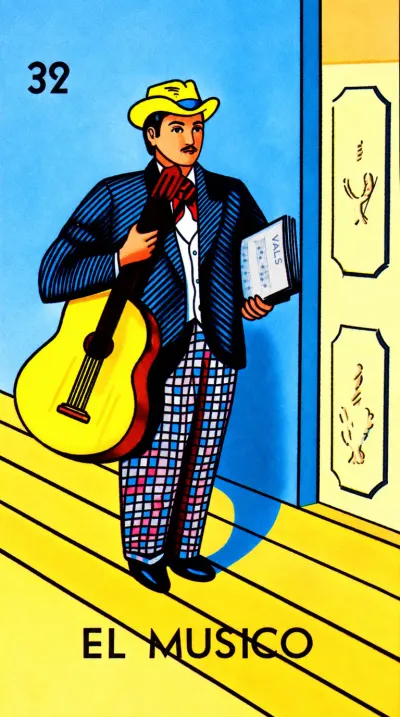
32 El MúsicoThe Musician
“El músico trae su guitarra para tocar bella canción”The musician brings his guitar to play a beautiful song.
The musician is the life of the party, playing on street corners, in cantinas, at serenades, or on the bus. He stands for the popular music that accompanies every moment of Mexican life, from birthday mañanitas to the last goodbye.
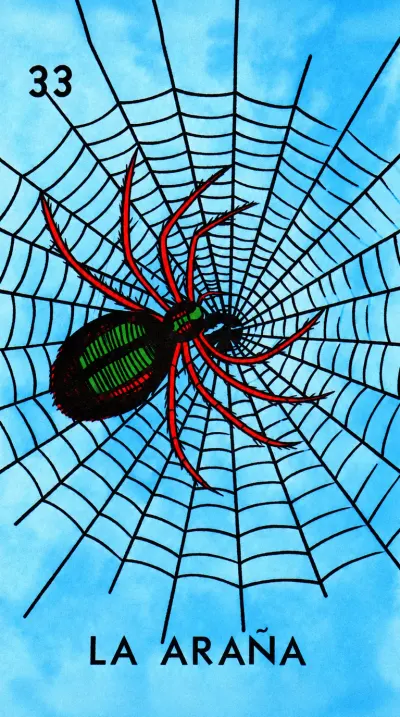
33 La ArañaThe Spider
“Atarántula que te araña con sus patas de alambre”Tarantula that scratches you with its wire legs.
The spider draws screams at home, but it also stands for patience and the fine work of weaving. The Spanish verse blends tarántula with atarantar, a Mexican word for leaving someone dazed.
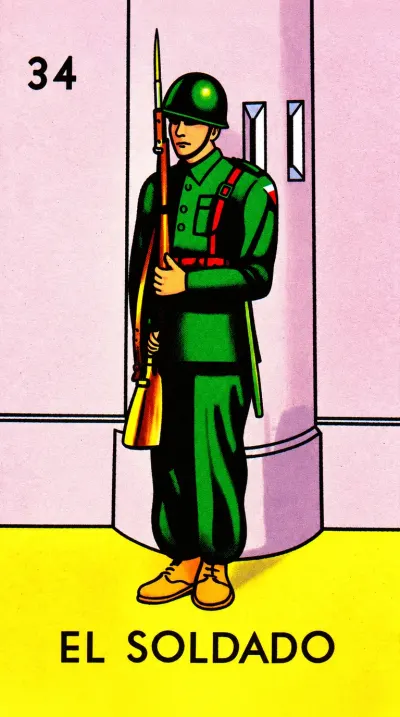
34 El SoldadoThe Soldier
“Uno, dos, tres, el soldado va de marcha”One, two, three, the soldier marches off.
The soldier recalls September 16 parades, grandparents' stories of the Revolution, and corridos about men who went off to fight. He stands for discipline and duty, and his verse mimics the count of a march.
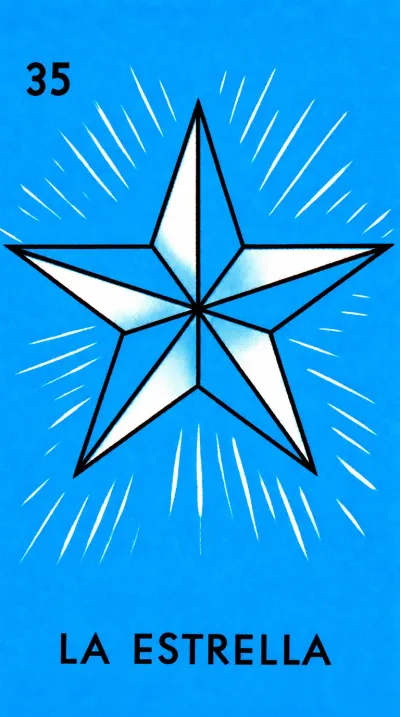
35 La EstrellaThe Star
“La guía de los marineros”The sailors' guide.
For centuries, stars guided people traveling by night over sea and land. In Mexico they're also tied to Christmas pageants, the Star of Bethlehem, and the seven-pointed piñatas of the posadas, and they stand for hope and wishes.
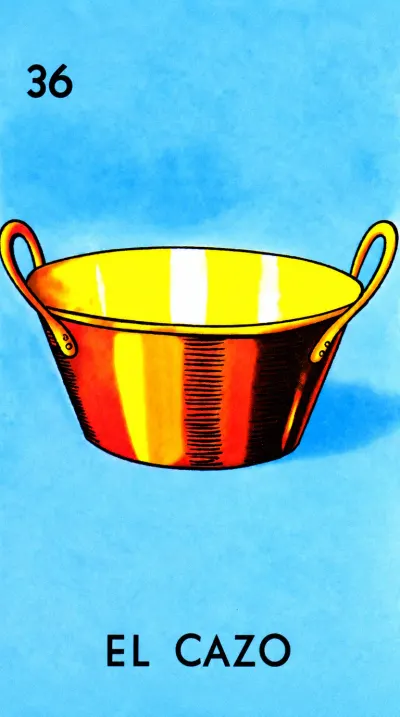
36 El CazoThe Pot
“El que con la olla nace, para cazo no le falta”Whoever is born with a pot never goes without a pan.
The copper cazo is the king of the big kitchen, where carnitas, cajeta, and fruit sweets are made, and it gets handed down for generations. The verse plays on cazo and caso (“case”), which sound the same in Mexico.
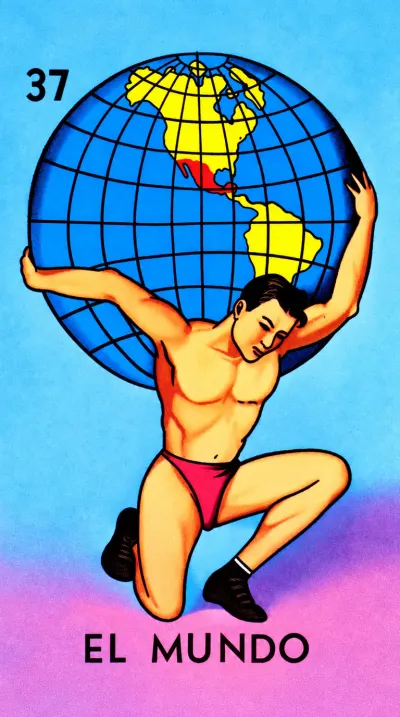
37 El MundoThe World
“El mundo es una bola, y nosotros un balón”The world is a ball, and we are a soccer ball.
The card shows a man carrying the globe on his back, like the giant of ancient stories or anyone who feels they carry every problem. The verse jokes that life kicks us around from one side to the other.
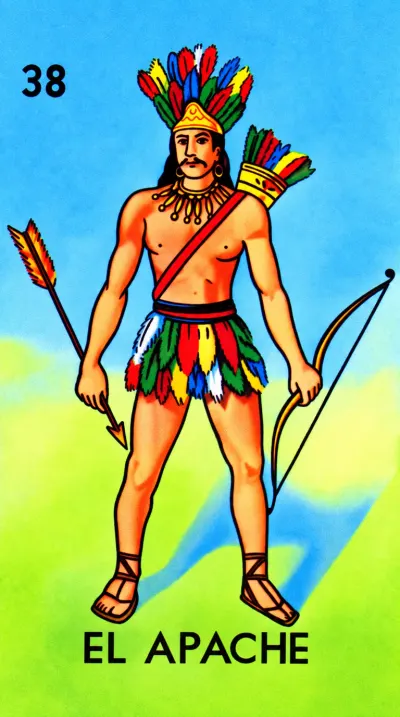
38 El ApacheThe Apache
“El indio apache con su penacho de plumas”The Apache Indian with his feathered headdress.
The name comes from the Apache peoples of northern Mexico and the U.S. Southwest, though the card's image is a popular idea rather than a faithful portrait of their culture. Some modern editions reinterpret or rename the card to be more respectful.
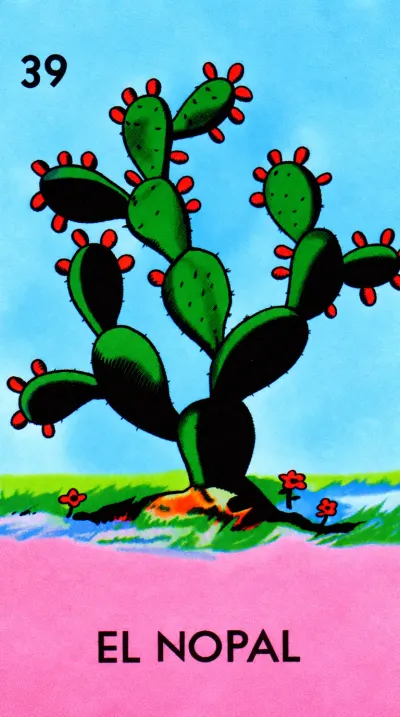
39 El NopalThe Cactus
“Al nopal lo van a ver, nomás cuando tiene tunas”People only go see the cactus when it has prickly pears.
Few plants are as Mexican as the nopal: it sits under the eagle on the national coat of arms and is eaten every day, grilled or with eggs. The verse makes a pointed observation: people only come around when you have something to give.
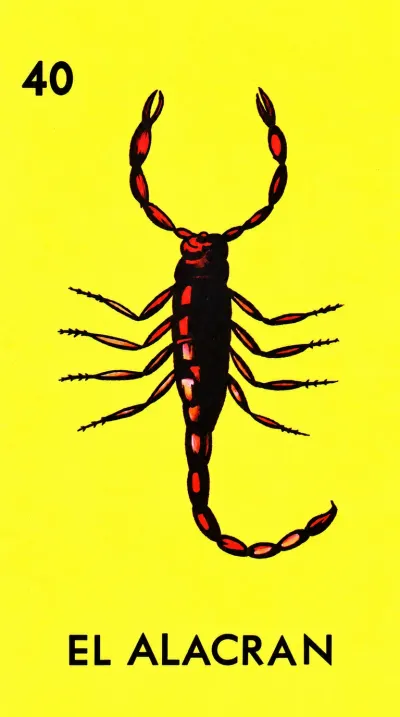
40 El AlacránThe Scorpion
“El que con el alacrán juega, a ser picado se arriesga”Whoever plays with the scorpion risks getting stung.
In many parts of Mexico, scorpions are familiar and feared visitors, so people shake out their shoes and check the blankets before bed. The card stands for the danger hidden in everyday life.
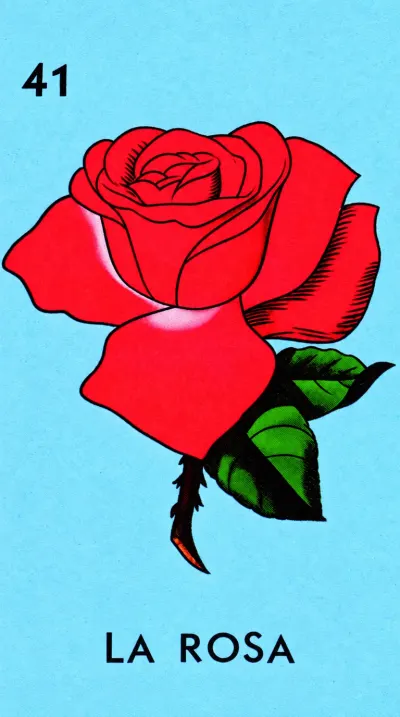
41 La RosaThe Rose
“Rosita, Rosaura, ven que te quiero ahora”Rosita, Rosaura, come to me, I love you now.
The rose is the flower of lovers, serenades, and Mother's Day on May 10, and tradition ties it to the Virgin of Guadalupe, whose roses appeared on Juan Diego's cloak. The verse plays with two women's names that begin like the flower's.
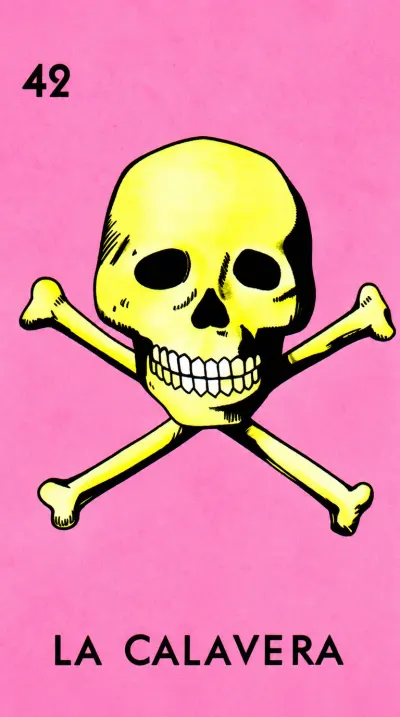
42 La CalaveraThe Skull
“Al pasar por el panteón, me encontré un calaverón”Passing by the graveyard, I came across a great big skull.
The skull is inseparable from Day of the Dead: sugar skulls with names on the forehead, satirical verses that tease the living, and altars full of marigolds. In Mexico it's a source of play and remembrance, not just something grim.
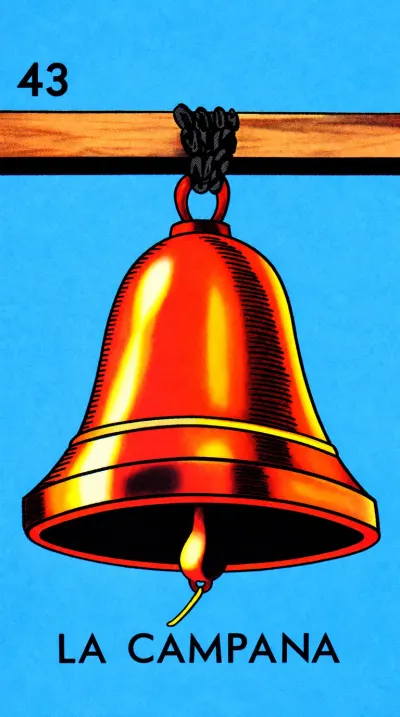
43 La CampanaThe Bell
“Tú con la campana y yo con tu hermana”You with the bell, and me with your sister.
Church bells set the rhythm of town life: they call people to Mass, announce fiestas and deaths, and ring during the Grito, and at school a bell announced recess. The verse is pure cheek, a quick rhyme that always gets a laugh.
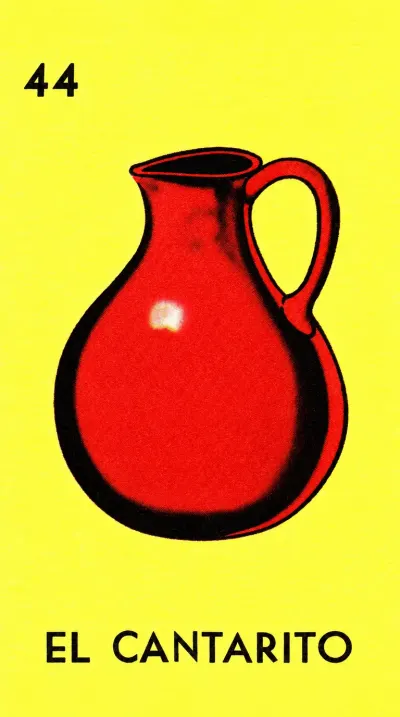
44 El CantaritoThe Water Jug
“Tanto va el cántaro al agua, que se quiebra y te moja”The jug goes to the water so often that it breaks and gets you wet.
Clay jugs were used to carry and keep water cool, and in Jalisco cantaritos is also a drink served in a clay cup. The verse twists the saying that a jug that keeps going to the water eventually breaks: here it soaks you too.
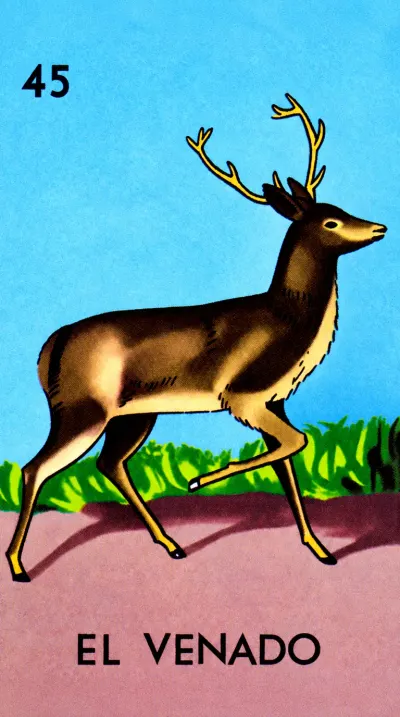
45 El VenadoThe Deer
“Saltando va el venadito, por el cerro y la cañada”The little deer goes leaping over the hill and through the ravine.
The deer is an animal of the hills and mountains, quick and hard to catch, and central to Indigenous cultures of the north, as in the deer dance of the Yaqui and Mayo peoples. It stands for grace, speed, and wildlife.
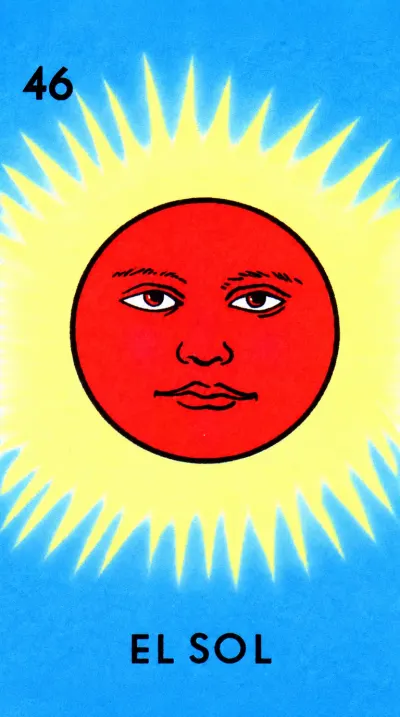
46 El SolThe Sun
“La cobija de los pobres”The blanket of the poor.
The sun was a central deity for Mesoamerican peoples and still appears in clay, tin, and embroidery across Mexico. The verse says a lot in a few words: those with nothing to cover themselves warm up in the sun.
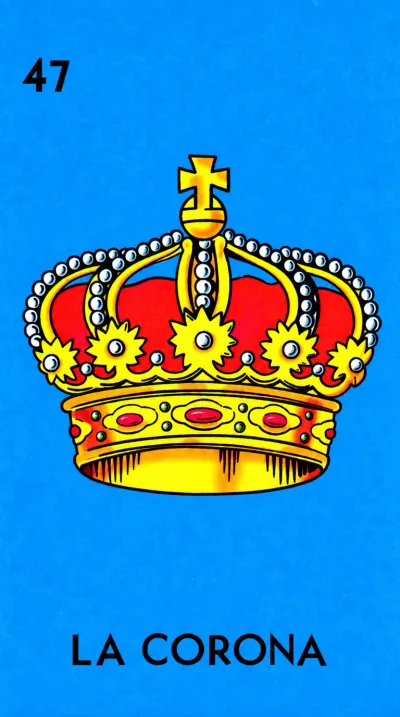
47 La CoronaThe Crown
“Póntela o cuélgala, pero no la abandones”Wear it or hang it up, but don't abandon it.
The crown stands for power, royalty, and triumph, but in Mexico it also recalls funeral wreaths and the king figure in the Rosca de Reyes. The verse suggests an honor must be looked after, even if it just hangs on the wall.
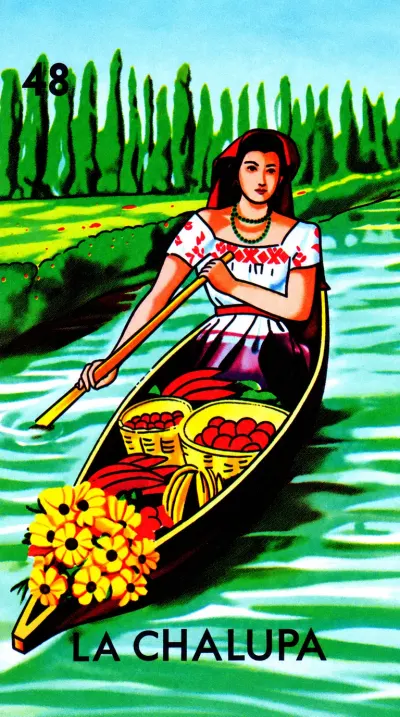
48 La ChalupaThe Canoe
“Rema que rema Juana, en su chalupa se va”Paddling and paddling, Juana goes off in her canoe.
The chalupa is a small flat-bottomed canoe once used on the canals of Xochimilco to carry goods to market, recalling the Mexico of floating gardens and markets on the water. It's also the name of a boat-shaped snack, which invites jokes.
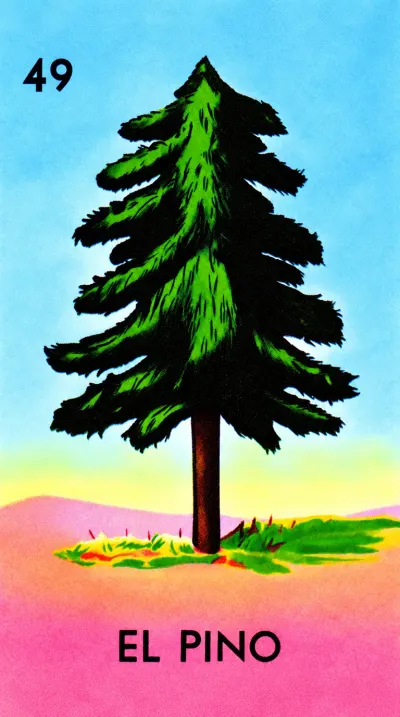
49 El PinoThe Pine Tree
“Fresco y oloroso, en todo tiempo hermoso”Fresh and fragrant, beautiful in every season.
The pine is the tree of the mountains and cold forests, and its scent recalls trips to the woods and cabins. In December, many Mexican homes call their Christmas tree a pino, and it stands for freshness and lasting green.
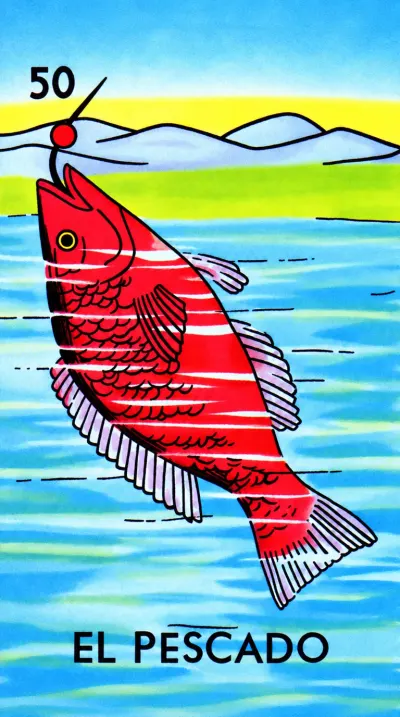
50 El PescadoThe Fish
“El que por la boca muere, aunque mudo fuere”The one who dies by its mouth, even though it's mute.
The card is known for the saying “the fish dies by its mouth”: whoever talks too much gets into trouble. The verse adds the irony that the fish, though mute, still gets caught by the mouth when it bites the hook.
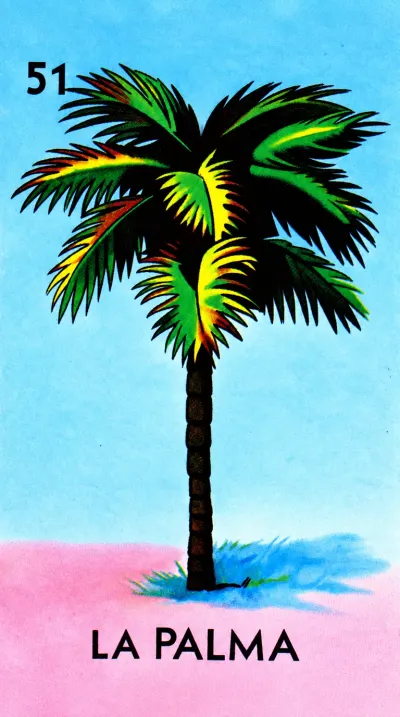
51 La PalmaThe Palm Tree
“Palmero, sube a la palma y bájame un coco real”Palm climber, climb the palm and bring me down a royal coconut.
The palm evokes the coast, the beach, and the heat, and also crafts: its leaves are woven into hats, mats, and Palm Sunday fronds. The verse asks the palmero, whose job is climbing palms to cut coconuts, for a fine coconut.
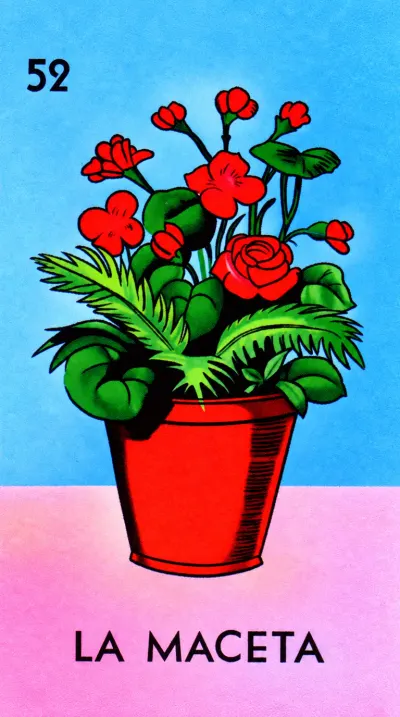
52 La MacetaThe Flowerpot
“El que nace pa maceta, no pasa del corredor”Whoever is born to be a flowerpot never leaves the porch.
Potted plants are the pride of Mexican homes, with ferns and geraniums tended by mom or grandma on the patio or porch. The saying in the verse means everyone has their place and it's hard to escape it.
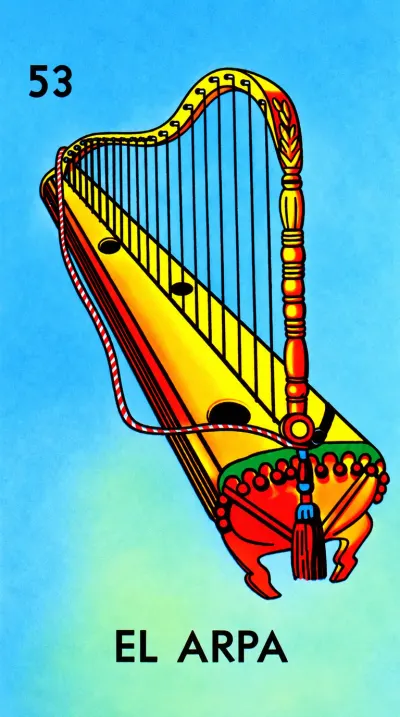
53 El ArpaThe Harp
“Arpa vieja de mi suegra, ya no sirves pa tocar”My mother-in-law's old harp, you're no good for playing anymore.
The harp is key to traditional Mexican music: it rings out in son jarocho and has accompanied mariachi and string groups. The verse is a classic Mexican mother-in-law joke, comparing her to an old harp that no longer plays.
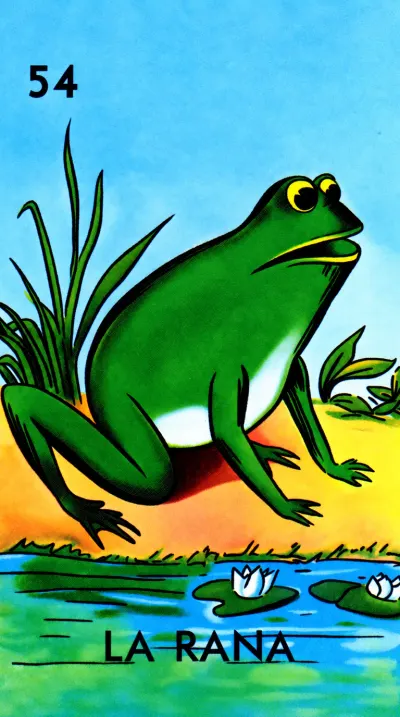
54 La RanaThe Frog
“Al ver a la verde rana, qué brinco pegó tu hermana”When she saw the green frog, what a jump your sister made!
The frog belongs to puddles, rivers, and the rainy season, and many ancient peoples linked it to water and fertility. The verse plays on the jump: frog and sister both leap, with the bonus of teasing someone's sister.
FAQ
How many cards are in Mexican lotería?
54, numbered from 1 (El Gallo, The Rooster) to 54 (La Rana, The Frog). Each board, or tabla, shows 16 of them in a 4×4 grid.
Are the cards called in Spanish or English?
Traditionally in Spanish, with a short verse (copla) before the name, like a riddle. The English names here are the usual translations, handy for Spanish class or for players who are learning.
Are all lotería decks the same?
The classic deck has been almost the same since Don Clemente Jacques printed it in the late 1800s, so the 54 characters and their numbers are shared by most decks. Modern editions change the art, and some renumber a few cards.
Printable: the 54 cards as a PDF and the Day of the Dead lotería. ¿En español? Las 54 cartas de la lotería.